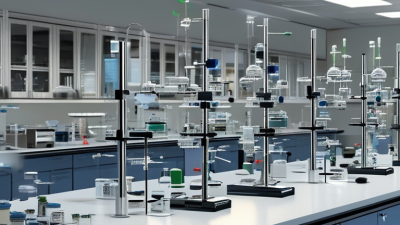
What Are the Top Lab Tools from China?
China has become a major source of laboratory equipment, from basic pipettes to advanced analytical systems. This article examines the top Lab Tools made or supplied by Chinese manufacturers. It focuses on practical value, technical performance, quality records, and after-sales support.
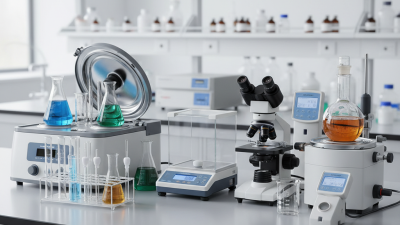
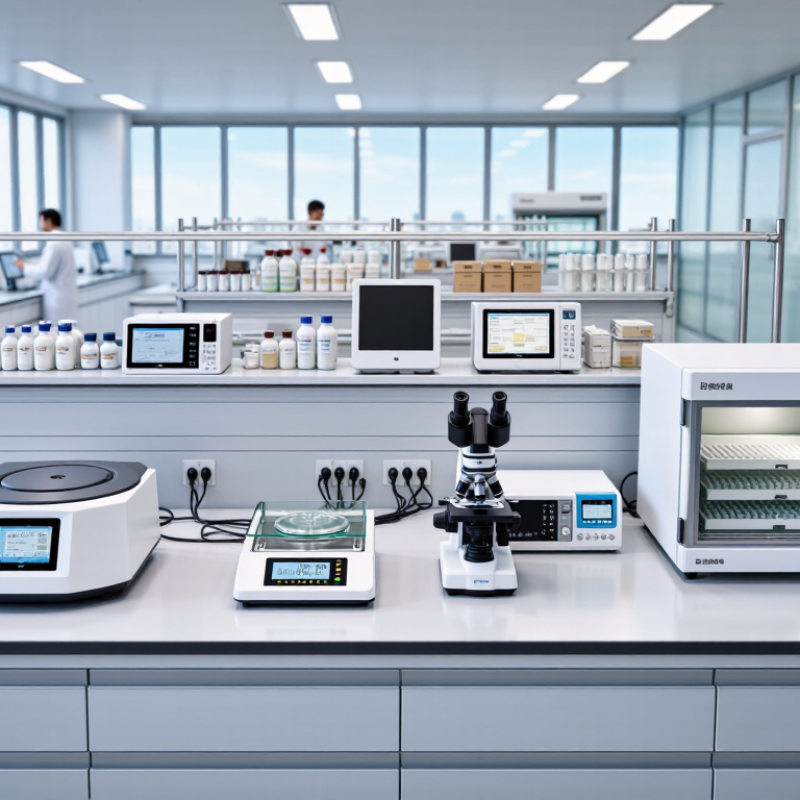
The selection includes centrifuges, digital balances, microscopes, spectrophotometers, incubators, and biosafety cabinets. Each tool serves a different laboratory pressure. A centrifuge must control speed and temperature precisely. A balance needs stable readings on a vibration-free bench. A microscope should deliver sharp images under real working conditions, not only in a brochure.
George M. Whitesides, a leading chemist and microfluidics researcher, made a useful observation: “The future of chemistry is in small systems.” His statement highlights the importance of compact, efficient, and carefully controlled equipment. Chinese manufacturers increasingly reflect this direction through space-saving designs, touchscreen controls, modular systems, and automated data recording.
Still, the picture is not perfect. A lower purchase price does not always mean lower total cost. Replacement parts, calibration services, software updates, and training can change the final decision. Some product pages also provide limited technical detail. That deserves attention.
Reliable buyers should review test reports, warranty terms, factory certifications, and independent user feedback. They should confirm whether instruments meet relevant laboratory and electrical safety requirements in their region. ISO/IEC 17025 calibration support can add confidence, especially for measurement-heavy work.
This guide does not treat every Chinese product as equal. That would be careless. Instead, it compares useful strengths and visible limitations, helping laboratories choose Lab Tools with clearer expectations and fewer expensive surprises.
What Defines High-Quality Laboratory Tools from China?
What Are the Top Lab Tools from China?
What Defines High-Quality Laboratory Tools from China?
When evaluating laboratory tools from China, I look beyond appearance, price, and catalog photographs. Quality begins with controlled materials, stable dimensions, and evidence that production matches the specification. For glassware, I check wall thickness, clear graduations, heat resistance, and smooth edges. For metal instruments, corrosion resistance and joint movement matter during repeated cleaning. Small inconsistencies become expensive during daily testing.
A reliable supplier should provide batch records, inspection data, and clear operating instructions. Calibration certificates should identify the method, date, uncertainty, and responsible laboratory. Accredited calibration work adds confidence, especially for balances, thermometers, and measuring devices. I also examine packaging, because a precise tool can arrive damaged after careless transport. Photos are useful, but they are not proof.
In practice, I test representative samples before placing a larger order. I compare readings across repeated trials and record drift, scratches, loose fittings, or unclear markings. Technical support matters when replacement parts or verification questions arise. Yet quality is not always consistent across every product line. That is an uncomfortable but important observation. My assessment improves when I combine supplier documents, hands-on checks, and feedback from trained laboratory users. No checklist replaces judgment. This approach helps identify tools that remain dependable under real laboratory conditions.
Which Chinese Laboratory Tools Are Most Widely Used?
Across teaching, clinical, and industrial laboratories, the most widely used Chinese laboratory tools are often everyday instruments rather than specialized machines. Analytical balances, pH meters, centrifuges, drying ovens, and magnetic stirrers support routine preparation and measurement. Micropipettes, glassware, water baths, and benchtop spectrophotometers also feature in many workflows. The exact mix depends on the lab: a food-testing room needs different equipment from a cell-culture facility. Small details matter. Stable temperatures, readable displays, and available spare parts can shape daily usefulness more than a long feature list.
Chinese-made equipment spans a wide range of quality and price, so country of origin alone cannot establish performance. For balances and pipettes, check calibration records, repeatability data, and local service access. For centrifuges and ovens, inspect rotor or chamber materials, temperature uniformity, noise, and safety interlocks. Ask for a demonstration with your sample type, then compare results against a suitable reference method. That takes time. Specifications can look convincing on paper, while installation, training, or replacement parts may be less polished than expected. This is not a reason to dismiss a tool; it is a reason to evaluate it under real working conditions.
How Chinese Lab Tools Support Different Research Fields
Chinese laboratory tools serve very different research needs, from cell imaging to water testing.
In clinical and microbiology labs, microscopes, centrifuges, incubators, and molecular testing systems help researchers examine samples and track results. The World Health Organization’s Global Tuberculosis Report 2024 estimated 10.8 million people developed tuberculosis in 2023. That scale underscores why dependable sample preparation and diagnostic research matter. Tools alone, of course, cannot ensure reliable findings.
Agricultural and environmental researchers use balances, spectrophotometers, chromatographs, and controlled-temperature chambers to study soil, crops, pollutants, and materials. China’s National Bureau of Statistics reported that national R&D spending reached 3.33 trillion yuan in 2023, or 2.64% of GDP. This broad investment supports research activity across fields, though it does not prove that every lab has equal access to equipment. There is no single perfect instrument. A low purchase price is not enough: calibration, consumables, maintenance, and clear service records affect results too. These details can be easy to overlook, and they deserve closer scrutiny when labs compare equipment.
What Standards Guide the Selection of Chinese Lab Equipment?
Selecting Chinese lab equipment should begin with the test method, not the price. Match an instrument’s range, resolution, sample volume, and operating limits to your protocol. For a balance, check readability, repeatability, draft protection, and permitted room temperature. Confirm the GB, ISO, or IEC requirements relevant to its category and intended use; no single standard covers every device. Electrical instruments may also need review against IEC 61010 safety and IEC 61326 electromagnetic compatibility requirements.
Request a declaration of conformity, operating manual, and calibration records. Check certificates for the instrument’s serial number, calibration date, measured points, uncertainty, and traceability. ISO/IEC 17025 addresses laboratory competence, not blanket approval of equipment, so verify the calibration provider’s accredited scope. A supplier’s quality-system certificate can inform your review, but it does not prove that a specific unit performs well. Test a sample under your own workflow when possible. Record warm-up time, drift, repeatability, and software behavior. Small details matter.
Tips: Set written acceptance limits before ordering, then compare delivered readings against them. Keep raw results and screenshots. A polished certificate can still leave questions; I would not treat paperwork as a substitute for a bench check.
How to Compare Chinese Lab Tools by Performance and Value
Comparing Chinese laboratory tools by value means testing the task, not the brochure. A centrifuge’s headline speed matters less than rotor balance, temperature recovery, vibration, and repeatability under a full load. For a balance, check readability, drift, and response to drafts; for a spectrometer, compare wavelength accuracy and baseline stability using identical reference materials. China’s 2023 Statistical Communiqué reported research and development spending of 3.3357 trillion yuan, equal to 2.65% of GDP. OECD Main Science and Technology Indicators reported 2.56% in 2022. These figures show investment, not instrument-level performance. Specs can mislead.
Ask for raw acceptance-test data, uncertainty statements, service intervals, spare-part lead times, and warranty exclusions. Check whether calibration is traceable and performed by an ISO/IEC 17025-accredited laboratory. Then calculate total cost over several years, including consumables, training, downtime, and local service—not just the purchase price. Run the same sample through shortlisted instruments, ideally across several days, and record operator time as well as results. I would still hesitate to rank tools from published specifications alone; methods and room conditions can change the outcome. Keep the test boring. A clear protocol often reveals more than a polished demonstration.
What Are the Top Lab Tools from China? Comparing Performance and Value
A brand-neutral reference for comparing air-displacement pipettes against commonly used ISO 8655 maximum permissible error limits.
How to use this chart: Lower error limits indicate tighter performance requirements. These are reference limits, not measurements of any specific product or country. When comparing value, check each model’s calibration results against the applicable standard, then consider purchase price, calibration traceability, warranty, and service support.