2026 Top Flex Neon Strip Suppliers for Global Buyers
The 2026 market for Flex Neon Strip products is becoming more technical, not merely more colorful. Buyers now compare brightness, energy use, bending radius, thermal control, and documented safety performance. Grand View Research and Mordor Intelligence both identify strong expansion in LED lighting and strip-light applications, driven by commercial interiors, hospitality, retail, and smart-building projects. Their findings suggest a clear trend: flexible lighting is moving from decorative accents toward specification-based installations.
This guide examines leading Flex Neon Strip suppliers for global buyers. It focuses on manufacturing experience, silicone extrusion quality, LED bin consistency, waterproof construction, and supply-chain reliability. A good supplier should explain lumen output, color-maintenance data, cut intervals, voltage options, and operating temperatures. Product samples should survive practical checks, including repeated bending, connector heating, and overnight operation inside a sealed channel.
Independent standards matter. IEC 60598-1, UL-related requirements, RoHS, REACH, and photobiological safety guidance can influence project approval across different markets. The IEA’s Energy Efficiency 2024 analysis also reinforces the importance of efficient lighting systems, although it does not evaluate individual strip suppliers. That limitation matters. Industry reports describe market direction, not factory performance. The data is useful, not perfect.
Global purchasers should therefore verify test reports, factory audit records, warranty terms, and batch-level quality controls before signing a large order. Ask for real installation photos. Request a current sample. Compare actual power draw against the datasheet. A polished catalog can hide inconsistent glue, uneven diffusion, or weak end caps. Reliable sourcing requires evidence, technical questions, and a willingness to reject attractive claims without verification.
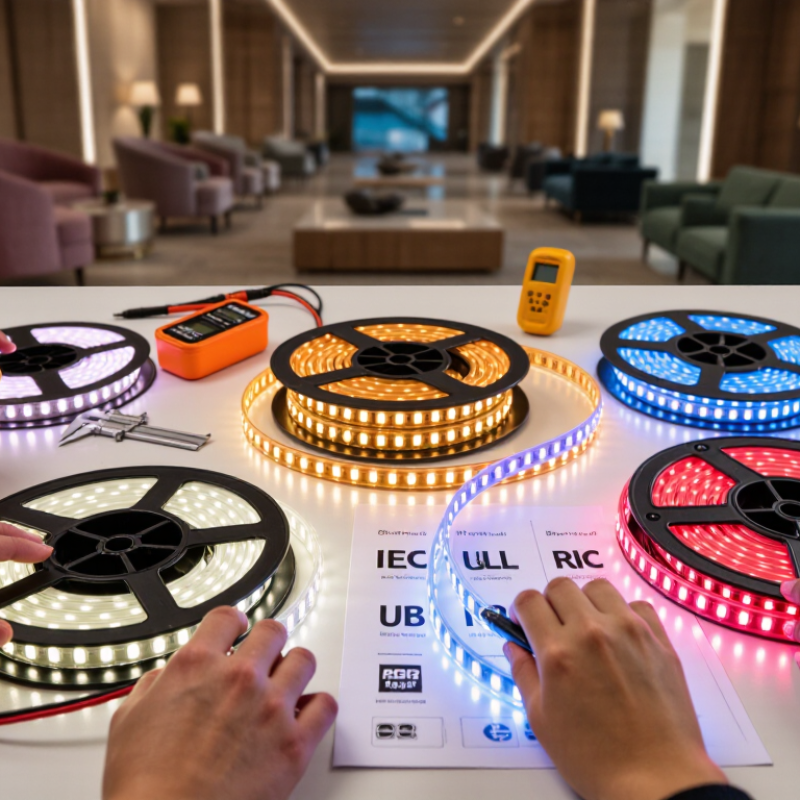
What Flex Neon Strips Are and How They Work
Flex neon strips are flexible linear lights designed to create a smooth, continuous glow. Unlike traditional glass neon, they use small LEDs inside a silicone or polymer housing. The outer body diffuses each light point, so the illuminated line appears nearly seamless.
The working principle is straightforward. Direct current powers the LEDs through a flexible circuit board. The diffuser spreads the light across its curved surface. Different side-emitting and top-emitting designs support signs, contours, shelves, and architectural edges. A 12V or 24V power supply is commonly used, but buyers should match voltage, wattage, and strip length carefully. Heat matters. Poor ventilation can shorten LED life and discolor the housing.
Installation still requires practical judgment. Cut only at marked points, then seal every exposed end with suitable connectors or end caps. Sharp bends may damage the circuit, even when the silicone feels soft. Outdoor projects need a verified IP rating, sealed joints, and weather-resistant mounting channels. A rating alone does not guarantee long-term performance.
From supplier evaluations, I would request sample strips, photometric data, bending limits, color-temperature tolerance, and test documentation. Small mistakes matter. A bright sample may hide uneven diffusion or excessive voltage drop across longer runs. One detail is often overlooked: confirm whether accessories are included and compatible. Global buyers should also review packaging quality, production consistency, and installation guidance before placing a large order.
Key Features to Compare Among Global Suppliers
2026 Top Flex Neon Strip Suppliers for Global Buyers
Key Features to Compare Among Global Suppliers
When comparing global flexible neon strip suppliers, begin with light performance, not catalog claims. Ask for measured brightness, color consistency, power consumption, and expected lifespan. A reliable supplier should provide test data from production samples, not only laboratory estimates. Request samples in both daylight and dim rooms. Small color differences become obvious across long installations.
Flexibility needs practical testing. Check the minimum bending radius, silicone hardness, surface finish, and resistance to moisture, dust, and temperature changes. A strip that bends easily may still crack around tight corners. Ask how the supplier controls cutting accuracy and connector fit. Poor tolerances create visible gaps. They also increase installation time. This detail is often overlooked.
Supply capability matters as much as technical quality. Compare sample lead times, minimum order quantities, packaging protection, replacement procedures, and communication speed. Confirm whether production batches can maintain the same color and brightness. Certifications should match the destination market and be supported by traceable documents. Do not accept unclear files. I have seen attractive samples fail during longer testing, so independent inspection remains worthwhile. No supplier is perfect; the best choice is the one that explains limitations clearly and corrects mistakes consistently.
Top Flex Neon Strip Suppliers for 2026
Top Flex Neon Strip Suppliers for 2026 are not chosen by catalog photos alone. Global buyers need evidence of stable brightness, clean bending, and consistent color temperature. Request samples before approving a large order. Inspect the silicone surface under direct light. Small bubbles, uneven diffusion, or stiff corners can become expensive installation problems.
Reliable suppliers should provide clear specifications for voltage, wattage, LED spacing, beam appearance, and cutting intervals. Outdoor projects also require verified water and dust protection, not only a printed rating. Ask for test reports, material details, production photos, and traceable quality records. Experienced manufacturers can explain how heat affects lifespan, especially inside aluminum channels or warm climates. Their answers should be specific. Vague promises deserve caution.
Lead time matters. So does packaging. A strong supplier uses moisture-resistant cartons, labeled reels, and protection around connectors. Buyers should compare sample performance with mass-production controls, because the first sample may look better than later batches. No supplier is perfect. I have seen excellent light output paired with weak adhesive backing. That detail is easy to miss. For 2026 sourcing, evaluate technical support, customization capacity, replacement handling, and communication across time zones. The best partnership feels practical: fewer surprises, clearer documents, and products that perform consistently after installation.
Manufacturing Standards, Certifications, and Quality Control
2026 Top Flex Neon Strip Suppliers for Global Buyers
Manufacturing Standards, Certifications, and Quality Control
Reliable flexible neon strip suppliers should follow IEC 60598-1 for lighting safety and IEC 60529 for ingress protection testing. IP67 products require controlled dust and water exposure tests, not only a printed label. The International Energy Agency reports that lighting consumes about 15% of global electricity. Efficient LED selection therefore matters, but efficiency must not reduce thermal safety or color stability.
A serious factory should verify LED bins, copper thickness, silicone hardness, and power output by batch. Incoming materials need traceable records. During production, inspectors should check solder joints, bending radius, voltage drop, and surface temperature. Aging tests can reveal dark sections after continuous operation. This is where many low-cost samples disappoint.
Certifications should match the buyer’s destination and product construction. Safety files, test reports, and factory audit records must remain current. A certificate alone is not enough. It can age. Suppliers should also provide RoHS and REACH declarations when required, plus clear IP testing evidence. TÜV Rheinland’s global product-quality research repeatedly links documented process control with fewer field failures, although testing cannot predict every installation mistake. Human handling still matters. Contact consistency, clean sealing, and honest tolerances deserve direct inspection before shipment.