





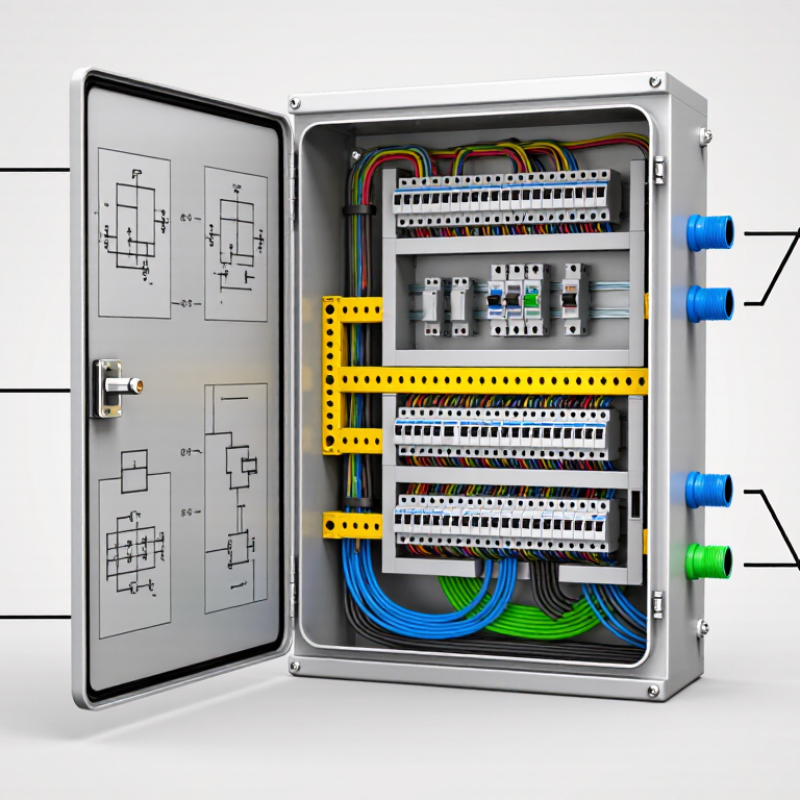
A junction box cabinet is a protective enclosure for joining, routing, and organizing electrical cables. It may contain terminal blocks, connectors, fuses, grounding bars, or control components. The cabinet keeps these parts away from dust, moisture, accidental contact, and mechanical damage. Its metal or non-metallic body also provides a defined space for safer inspection and maintenance.
Inside, incoming cables enter through glands or sealed cable entries. Conductors are then connected to terminals or approved joining devices. Outgoing cables leave through separate entries and continue toward motors, sensors, lighting, or control equipment. A hinged door allows technicians to check connections without opening the entire electrical system. Clear labels matter. They reduce mistakes during testing and repairs.
The cabinet’s protection level depends on its enclosure design, seals, materials, and installation location. Outdoor equipment may need stronger weather resistance than a clean indoor panel. Technicians should verify wire sizes, grounding paths, terminal ratings, and available space before installation. Crowded wiring can trap heat and make troubleshooting difficult. Small details matter.
It is not always a simple box. Some installations require ventilation, drainage, shielding, or lockable access. In practice, labels can fade, and unused cable entries may remain poorly sealed. That is where careful inspection becomes essential. Design drawings, safety procedures, and applicable electrical requirements should guide every connection.

